
28 September 2026
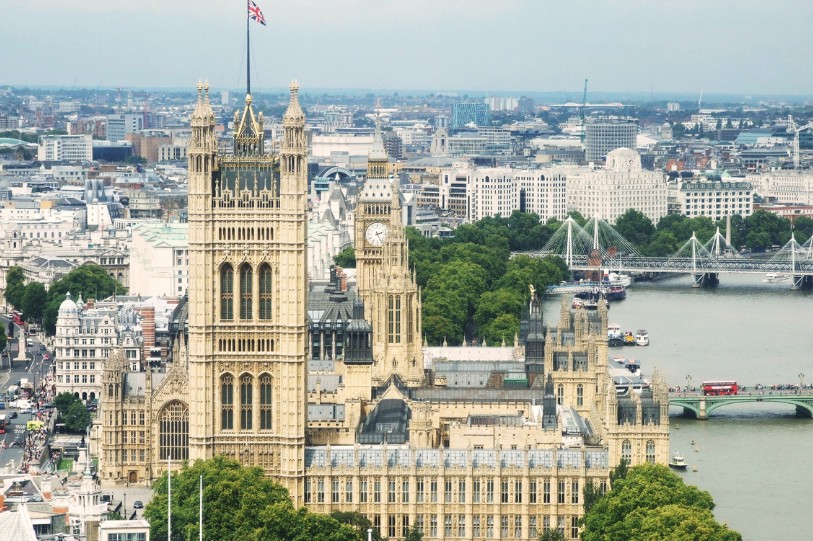
On 17 September 2026, the House of Lords returned to one of the most contentious issues facing the independent schools sector: the impact of VAT on school fees.
The debate, led by Lord Lexden, considered the effect of VAT and other tax changes since the introduction of VAT on private school fees in January 2025. It also brought into sharp focus a question that school leaders and governors have been grappling with for almost two years:
What has actually happened to the independent school sector since VAT was introduced – and what does it mean for the future?
For schools, this is about much more than politics. VAT has affected fee levels, affordability, pupil recruitment and financial planning. At the same time, schools are operating against a backdrop of falling birth rates, changing demographics, increased employment costs and wider economic uncertainty.
The Lords debate demonstrated just how difficult it is to separate these different factors.
For school leaders, the message is clear: the operating environment remains uncertain, and assumptions made before January 2025 need to be revisited.
What happened in the House of Lords?
The debate was a “take note” debate rather than a vote on whether VAT should be removed. Lord Lexden asked the House to consider the impact of VAT and other tax changes on independent schools since 1 January 2025. The motion was subsequently agreed, but there was no change to the Government’s policy as a result of the debate.
Lord Lexden and several other peers argued that VAT had placed substantial financial pressure on independent schools and families.
They pointed to falling pupil numbers, school closures, increased fees and the potential consequences for the state sector.
Other contributors challenged the idea that the changes could be attributed solely to VAT. The Government’s position is that falling pupil numbers reflect a combination of VAT, demographic change and other factors, and that the overall impact remains broadly consistent with the assumptions underpinning the original policy.
That distinction is important. It means that there is now considerable evidence of change in the independent sector, but there is still disagreement about causation.
For individual schools, however, the practical question is less about proving the national impact of VAT and more about understanding what is happening in their own market.
What do the latest pupil numbers tell us?
The House of Lords Library briefing published ahead of the debate provides some useful context.
There were approximately 560,300 pupils in independent schools in England in January 2026, representing a 3.8% fall compared with the previous year. Over the same period, pupil numbers across all schools in England fell by 1.2%, reflecting wider demographic pressures. The Government therefore argues that the reduction in independent school numbers cannot simply be attributed to VAT.
However, representatives of the independent sector point to the larger scale of the fall in independent schools and argue that demographic change alone does not explain it. During the Lords debate, peers highlighted particularly significant falls at key entry points, including Reception, Year 7 and Year 12.
The important point for school leaders is that both things can be true.
Demographic decline can reduce the overall pool of potential pupils while VAT simultaneously affects how many families within that pool can afford independent education.
This is why national statistics cannot tell an individual school exactly what is happening in its own market.
VAT is interacting with demographics This is perhaps the most important issue for school leaders to understand.
Independent schools are not simply dealing with a VAT problem, they are dealing with a market problem in which several factors are moving at once.
Birth rates have fallen significantly over recent years, meaning smaller cohorts are now moving through the school system.
The House of Lords debate acknowledged this wider demographic trend. The Government pointed out that pupil numbers have fallen across primary, secondary and independent schools, rather than only in the independent sector.
For a school, however, the national picture is only the starting point.
The impact of demographic change varies enormously from one catchment to another.
Some schools may be operating in areas where the number of children is falling rapidly. Others may benefit from new housing, inward migration or relatively affluent family populations.
That makes local demand analysis increasingly important.
Are parents leaving because of VAT?
This is one of the most difficult questions to answer conclusively.
Before VAT was introduced, HMRC and the Office for Budget Responsibility estimated that the policy could eventually result in around 35,000–37,000 fewer pupils attending private schools across the UK, with most expected to transfer to the state sector.
The Government maintains that the pupil changes seen so far remain broadly consistent with those assumptions.
Independent school sector representatives, however, argue that the decline has been greater than originally expected and cannot be explained by demographics alone.
The House of Lords Library concluded that there remains debate about the extent to which changes in pupil numbers can be attributed to VAT rather than demographic factors and wider market pressures.
For individual schools, this makes tracking why families leave increasingly important.
A parent leaving because of affordability is different from a parent leaving because of dissatisfaction with the school’s provision.
A family choosing a grammar school because their child has secured a place is different again.
Understanding these distinctions matters when making decisions about fees, staffing and investment.
The financial implications are broader than VAT
VAT is only one element of the financial pressure facing schools.
Independent schools have also been affected by changes to business rates, employer National Insurance and other increases in operating costs.
At the same time, schools are under pressure to maintain staffing levels, salaries, facilities and educational provision.
The result is a difficult balancing act.
Increasing fees may protect margins but could make the school less affordable.
Holding fees down may support recruitment but put pressure on financial sustainability.
Cutting costs may protect the balance sheet but risk damaging the proposition that parents are paying for.
And reducing investment may create longer-term competitive problems.
The Lords debate highlighted these competing pressures, with speakers raising concerns about fees, bursaries, staffing and school closures.
For governing bodies, the answer is therefore unlikely to be found in a single year’s budget.
Schools need to model different scenarios.
What does the debate mean for school fees?
The introduction of VAT has made fee strategy considerably more complicated.
A school increasing its headline fee by 5% is no longer simply increasing the price of its education by 5% from the parent’s perspective.
The final amount paid by the family also reflects VAT and any other changes to charges.
That means schools need to understand fee elasticity: how sensitive demand is to changes in price.
Not every school will experience the same response.
A highly differentiated school in a wealthy catchment may have considerably more pricing flexibility than a school operating in a highly competitive market where families have several alternatives.
This is where robust market and parent research becomes particularly valuable.
Rather than asking simply, “What fee do we need to charge?”, schools should be asking:
- What can our market afford?
- How does our fee compare with competitors?
- What do parents believe they receive in return?
- How sensitive is demand to further fee increases?
- Which families are most price-sensitive?
- Could a change in fees affect particular year groups disproportionately?
These questions should form part of a wider fee strategy rather than being considered only during the annual budgeting process.
School closures: what should leaders take from the debate?
School closures received considerable attention during the Lords debate.
Sector representatives highlighted the number of mainstream independent schools that have closed since VAT was announced and introduced.
The Government offered a different interpretation, pointing out that the number of closures remains within historical patterns and that schools continue to open. It noted that 60 private schools closed in 2024–25 and 67 in 2025–26, compared with an average of around 75 closures a year over the previous 20 years.
Again, the difference in interpretation matters.
There is no simple national answer to whether VAT is making an individual school financially unsustainable.
Every school has its own combination of:
- Pupil numbers
- Fees
- Staffing costs
- Pension costs
- Property costs
- Debt
- Local demographics
- Competitor schools
- Governance
- Educational proposition
- Financial reserves
For governors, the important lesson is the need for early warning indicators.
Waiting until a school has reached a serious financial crisis leaves far fewer options.
What about the state sector?
One of the central arguments in the Lords debate concerned what happens when pupils move from independent to state schools.
The Government argues that the state sector has sufficient capacity to absorb additional pupils and points to substantial spare capacity across the system. It reported that 98.7% of primary applications and 96.4% of secondary applications for the new school year resulted in an offer from one of the applicants’ preferred schools.
Critics argue that this national picture does not necessarily reflect the pressure in particular local authorities or schools.
For independent school leaders, the important issue is what happens locally.
If a significant number of families in a school’s catchment can no longer afford independent education, what alternatives do they have?
- Are there grammar schools?
- Are local state schools oversubscribed?
- Are there new schools opening?
- What is the demographic trajectory?
- And how might these factors affect future demand?
Again, this is where catchment analysis becomes crucial.
SEND adds another layer of complexity
The impact of VAT on SEND provision was also raised during the debate.
The Government highlighted existing arrangements for children whose independent school placement is named in an Education, Health and Care Plan and funded by a local authority, under which the authority can reclaim VAT. It also noted that the number of pupils with SEND in mainstream independent schools had not fallen in the way some had predicted.
For schools with significant SEND provision, this is an area that warrants particularly careful analysis.
The demand for specialist provision is changing, while the financial and regulatory environment is also evolving.
Schools need to understand not only the number of pupils requiring support, but the financial sustainability of the provision they offer and the expectations of families.
What should school leaders do now?
Perhaps the most useful outcome of the Lords debate is that it reinforces the need for schools to look at their own data rather than relying on national headlines.
Leadership and governance teams should consider undertaking a structured review covering five areas.
Revisit your pupil forecasts
- Are your previous enrolment assumptions still realistic?
Look at every year group and model different scenarios for recruitment, retention and future demand.
Understand your catchment
- Where are your pupils coming from?
- Where are prospective families located?
- How is the local population changing?
- What competing schools are available to them?
Understand your parents
- Do you know why parents choose your school – and why some leave?
- How has their perception of value changed since VAT was introduced?
- Which families are becoming more price-sensitive?
Review your fee strategy
Don’t simply calculate the increase required to balance the budget. Assess the likely market response and model different fee scenarios, considering how each might affect pupil numbers and revenue.
Stress-test the financial model
Governors should understand what happens if pupil numbers are lower than expected, costs increase further or fee increases are constrained and scenario planning is particularly important in an environment where several variables are changing simultaneously.
The debate is not over, but schools cannot wait for certainty
The House of Lords debate demonstrated that there remains considerable disagreement over the impact of VAT on independent schools.
- The Government maintains that the policy is broadly producing the outcomes expected and that demographic change is an important part of the explanation for falling pupil numbers.
- Representatives of the independent sector argue that VAT has had a much more significant impact on enrolment, affordability and school viability.
For school leaders, waiting for that debate to be resolved is not an option. The decisions being made now about fees, staffing, investment and provision will shape the sustainability of schools over the next five to ten years.
The most useful question is therefore not:
“Is VAT responsible for the decline?”
It is:
“What is happening in our market, why is it happening, and what should we do about it?”
That requires evidence and for individual schools, that evidence needs to come from their own parents, pupils, catchment, competitors and financial data.
How MTM Consulting can help
MTM Consulting helps independent schools understand changing markets and make evidence-led strategic decisions.
We can support leadership and governance teams with:
- Catchment and demographic analysis – understanding current and future demand in your local market
- Parent and stakeholder research – understanding what families value, why they choose your school and what may cause them to leave
- Fee strategy and elasticity research – assessing the relationship between fees, affordability and demand
- Competitor analysis – understanding how your school compares with alternatives available to prospective families
- Pupil forecasting – modelling future recruitment and retention
- Strategic planning – bringing market, financial and operational evidence together
The VAT debate will continue, but schools do not need to wait for the political argument to be settled before taking action.
The schools best placed to navigate the next few years will be those that understand their own market, know what their parents value and have tested their strategy against a range of possible futures.
National headlines tell you what is happening to the sector. Your own data tells you what is happening to your school.
FAQs
Latest News & Analysis
MTM News
Emily Hargest
|
9th October 2026
Understand Your Market, Strengthen Your School
At this year’s Prep Heads Conference at Radley College, I talked about something many heads are living with: falling pupil numbers. Over the last decade, a great many prep schools...
Read News Article
MTM Analysis
Emily Hargest
|
28th September 2026
VAT on school fees: What did the House of Lords debate tell school leaders?
On 17 September 2026, the House of Lords returned to one of the most contentious issues facing the independent schools sector: the impact of VAT on school fees. The debate,...
Read Analysis